Fine Motor Skills: A Practical Classroom Guide
If there’s one thing I’ve learned in the classroom, it’s that fine motor development is about so much more than learning to hold a pencil! We sometimes focus on fine motor skills because we want children to develop their handwriting but these skills are used in almost everything we do. From getting dressed in the morning to building with construction materials, doing puzzles and creating something they’re proud of, fine motor skills help children become more independent and confident.
What are fine motor skills?
Fine motor skills are the small, precise movements we make using the muscles in our hands and fingers. They work alongside our eyes, brain and the rest of our body to help us carry out tasks that require control and precision. They work hand in hand with gross motor skills, which involve larger muscles and bigger movements. Both are important for children’s development!
Fine motor skills develop from birth and continue to develop throughout childhood and into adulthood. We use them every day without even thinking about it. Getting dressed, fastening buttons, preparing food, writing, knitting, crocheting and completing puzzles all involve fine motor skills. So thank your primary school teachers next time you’re chopping garlic!
In the classroom, these skills help children manipulate concrete maths resources, turn pages in books, use scissors, build with construction, draw and write. They also contribute to children’s independence, creativity and ability to take part in activities they enjoy.
Ultimately, fine motor development isn’t just about producing neat handwriting. It’s about giving children the skills they need to participate in everyday life, both inside and outside the classroom.
What are some festive finger gym activities?
One thing my class absolutely love is a Dough Disco! If you’ve never tried one, it’s a brilliant way to get children moving their fingers and hands before a writing activity. Using modelling dough, children can squeeze, poke, splat, roll, pinch and stretch along to a fun song.
I also love finding ways to incorporate fine motor activities into things we’re already doing, rather than always treating them as a separate task. One of my favourite things to do is make up little hand movements to go along with a story. If we’re reading The Gruffalo, for example, we might make our fingers into a tiny mouse and then stretch them out like a long snake. We can make claws, wiggle our fingers like whiskers and use our hands to act out different characters. The children really enjoy this because it feels like part of the story rather than another job they’ve been asked to do. It keeps everyone engaged in the story too.
I think that’s the key with fine motor activities - they don’t need to be complicated to be effective. Little opportunities to squeeze, stretch, pinch, poke and move our fingers in different ways can be fitted into the school day really easily.
What activities can help strengthen children’s hands?
When I’m thinking about strengthening children’s hands, I look for activities that involve pushing, pulling, squeezing, pinching, twisting, opening and closing. Anything that gets little hands working against some resistance can be useful.
Some of my favourite activities include scrunching paper into balls, squeezing sponges to move water between containers, using clothes pegs to hang up pretend washing in the house corner, stretching elastic bands around classroom objects, and using tongs and tweezers to pick up and move small objects Modelling dough is truly a brilliant resource. Rolling it, squeezing it, pinching it and pulling it apart gives children lots of opportunities to work their hand and finger muscles. We can also build these skills into everyday classroom activities. Opening containers, fastening lids and connecting construction pieces all give children opportunities to practise different movements.
What activities can support pre-writing skills and pencil control?
I think it’s really important to remember that pre-writing skills start long before a child picks up a pencil.
Children need opportunities to develop strength and stability throughout their bodies, including their shoulders and arms, before they can find success in the smaller movements involved in mark-making. Activities such as climbing, crawling, carrying buckets of water, moving blocks and pushing objects across the playground all support broader physical development.
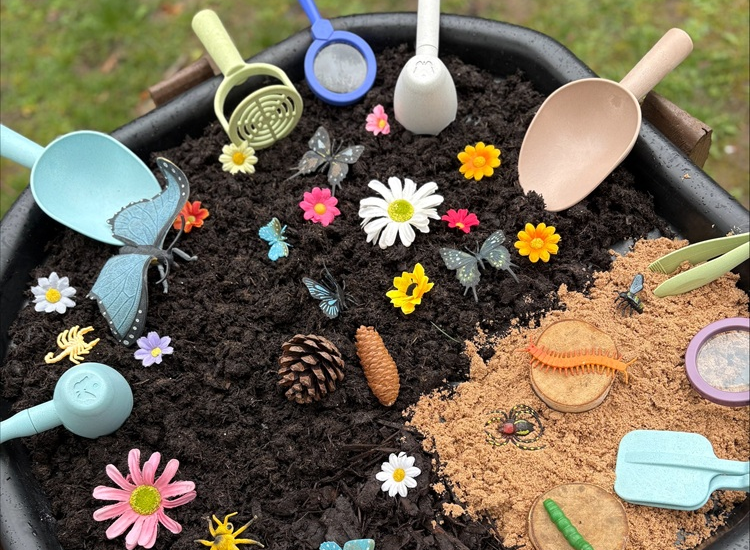
When it comes to mark-making itself, I like to give children lots of different materials to explore. We often practise pre-writing shapes and patterns in sand, glitter trays or shaving foam or use chunky crayons, chalk, paintbrushes, short pencils and longer pencils. I try to give them lots of different things to mark-make with. A favourite of my class are UV ‘spy’ pens!
I wouldn’t want children to think that mark-making always means sitting at a table with a pencil and a worksheet. There are so many other ways to practise these movements, and different tools give children different experiences.
Games such as Operation can also provide opportunities to practise careful, controlled movements. I also find any card game like Dobble or UNO secretly works on fine-motor skills - holding a deck of cards is really tricky for small hands!
What activities can help develop cutting and threading skills?
Cutting and threading are great activities because they involve children using both hands together but each hand has a slightly different job. When we’re cutting, one hand operates the scissors while the other holds and guides the paper. With threading, one hand might hold the bead while the other guides the lace through it. This is called bilateral coordination and it’s an important skill for lots of everyday tasks.
Before introducing scissors, I’d start with activities that practise the movements children need. Using tongs, tweezers and pegs helps children practise squeezing and releasing. Tearing paper is another good starting point and cutting modelling dough with scissors. When children are ready to use scissors, short snipping activities can help them build confidence and control. My class like to make ‘snip salad’ for the play kitchen by cutting up bits of multi-coloured paper into a big bowl!
For threading, start with larger beads and thicker laces before introducing smaller materials or more complicated patterns. My class also really enjoy paper weaving, which gives them opportunities to coordinate both hands and follow a pattern. As with any new skill, it’s about breaking the task down and giving children opportunities to practise the individual movements before expecting them to put everything together.
What fine motor resources are useful in the classroom?
There are so many useful fine motor resources and you really don’t need to spend a fortune building up a collection.
Some of my favourites are clothes pegs, tongs, tweezers, scoops, pipettes, pegboards, pattern boards, threading beads, lacing cards, pipe cleaners, and modelling dough. Pipettes are great for practising squeezing and releasing while threading beads and lacing cards give children opportunities to work on coordination and precision. Pipe cleaners are brilliant for bending, twisting and shaping and pegboards encourage children to place small pieces accurately.
I’m also a big fan of offering a variety of mark-making tools. Have chunky crayons and pens available but also shorter pencils, thinner pencils, chalk and paintbrushes. Different tools encourage different movements and give children the chance to explore what works best for them.
I think the best fine motor resources are the ones children actually want to use. You can incorporate them into play, add them to a tuff tray or use them as part of a classroom activity. It doesn’t all have to look like a formal fine motor intervention. Sometimes the simplest resources provide the best opportunities for children to practise!
How can fine motor activities be adapted for different abilities?
Sometimes a small change to an activity or resource can make a huge difference to a child’s ability to take part. For example, if a child is finding threading difficult, try using larger beads and thicker laces. If they’re struggling to squeeze pegs, start with ones that require less force. Softer modelling dough can be easier to manipulate than firmer dough, while chunky crayons and shorter pencils may be more comfortable for some children.
You can also break activities down into smaller steps. Rather than expecting a child to complete a whole threading pattern, start with one bead. Rather than expecting them to cut around a complicated shape, start with a few simple snips in a strip of paper. Know when to stop and when to gently push further - the demand of an activity will be different for different children. Know your learners and be responsive to them!
Some children will benefit from an adult modelling the activity, visual prompts, extra time or repeated opportunities to practise. Others may be ready for a greater challenge, such as smaller beads, more detailed patterns or more precise cutting tasks.
It’s also important to consider sensory preferences and physical comfort. Not every child will enjoy the feeling of shaving foam or modelling dough and that’s okay. Offer alternatives so they can still practise the same underlying skills. That’s why it’s important to step back and look at what skills they’re working on, rather than what activity they’re doing. Can they work on the same skill in a different way?
Most importantly, remember that fine motor development isn’t a straight line. A child might be fantastic at building with tiny construction pieces but struggle with scissors. Another might love drawing but find fastening buttons difficult. We need to look at the individual child rather than making assumptions about what they should be able to do. The aim isn’t to make every activity easier. It’s to find the right level of challenge so that children can participate, experience success and build their skills and confidence over time.