Classroom Displays: Ideas and Resources for Engaging Learning Spaces
Meet Nicholas from
@teachingintechnicolour
Nicholas, known online as Teaching in Technicolour, is a Primary School Teacher and Educational Content Creator who shares creative ideas designed to make learning more active, visual and collaborative.
We sat down with Nicholas from
@teachingintechnicolour
to find out more about his viral classroom displays and why they matter to learning.
Q: Why do classroom displays matter and what impact can they have on learning?
A: Over time, my views on displays have changed a lot. In the early days of my teaching career, I was very focused on creating something that was visually impactful. It looked good, but it also took a huge amount of my time and energy.
I’ve come to realise that the best wall displays are the ones that are co-constructed with the children, where they can see their own work, learning and contributions reflected back at them.
Displays are important because they help set the tone and ethos of a room. For me, that has moved away from simply having something bright, interesting and lovely to look at. You should actually be able to see the learning on the walls. This brings a classroom to life in a much more meaningful way.
Q: When you’re planning a display, how do you decide what goes on it?
A: I’ve been quite lucky with wall space throughout my career, so I’ve been able to give different areas of the classroom a curricular focus. I’ll have a literacy working wall, a maths working wall, quite a large area for interdisciplinary learning and spaces for things like health and wellbeing. Depending on our focus, there might also be a science or modern languages wall.
The biggest change for me is that I no longer put things up simply for the sake of filling the walls. I certainly wouldn’t spend the summer holidays filling a classroom with resources that the children haven’t encountered yet.
I believe what goes on the wall should either be something the children have created or something they are genuinely going to use. Those things should be introduced, discussed and gradually built up with them. Otherwise, we risk creating an information overload of things that have no real meaning to the learners looking at them.
Ultimately, I decide what goes up by asking myself what my pupils will benefit from the most and what they have done that they’ll feel proud displaying on the walls.
Q: How do you involve pupils in creating or contributing to displays so that they feel ownership?
A: I think that ownership starts really early in the year. While I’m getting to know the children, we’ll usually do health and wellbeing activities and ask them questions like ‘How do you want your classroom to make you feel?’ As well as this, we’ll do self-portraits and give them lots of opportunities to express themselves.
Seeing those activities go onto the walls early on allows the children to literally find themselves within their new classroom.
There are also little things that matter to me. I personally don’t like writing a child’s name directly onto their finished artwork. If they have spent an hour creating something, I want to respect that piece of work. I tend to mount work, often onto black paper, and put their name discreetly on the mount rather than on their creation. Or even better, I’ll have them sign their own work themselves. They love that!
Most importantly, wherever possible, I try to ensure that every child can see their work represented. I appreciate that I’ve been fortunate to have lots of display space and not every classroom has that luxury, but we can find creative ways around that, whether work extends beyond the traditional board or some is displayed in shared spaces outside the classroom.
Q: How do you balance making displays visually engaging while keeping them purposeful for learning?
A: This has taken me quite a long time to hone! Six or seven years ago, I loved vibrant backgrounds. I’d go into DIY shops and come away with enormous wallpaper samples of bricks, bookcases and all sorts of patterns because I thought they would make brilliant display backgrounds. They did look cool, but once you put 30 pieces of children’s work on top, it looks too busy.
Now, I almost always use a neutral white backdrop with a strong black border and simple black headings. The children’s work then provides the colour, energy and interest. It becomes like a blank canvas that allows their work to speak for itself.
That doesn’t mean everything has to be a learning resource. Sometimes a display can simply say, ‘Wow, look at this incredible artwork!’ Celebrating something beautiful that the children have created has value, too.
Other displays can have a much more explicit teaching purpose. For example, rather than a traditional Star Writer board with three complete pieces of writing, I might enlarge a particular sentence or paragraph and highlight exactly what that child has done successfully, as well as how it meets our learning intention or success criteria.
So, for me, visually engaging and purposeful aren’t opposites. Sometimes the purpose is to teach and support; sometimes the purpose is simply to celebrate.
Q: How often do you refresh your displays and what prompts a change?
A: Some displays might change termly and others might remain for most of the year. For me, what prompts a change is really whether something is still fresh, relevant and useful.
I’ve absolutely been guilty, particularly during years that have felt intense or overwhelming, of suddenly realising that the same literacy examples have been on the wall since August and it’s now October! I think that’s understandable. In the reality of teaching, displays will sometimes fall down the to-do list.
What should prompt the change is the children’s learning. Do they need a new reference point? Do they need examples of what a successful piece of work could look like? Has our topic changed? Is what’s currently there still supporting them in achieving their goals?
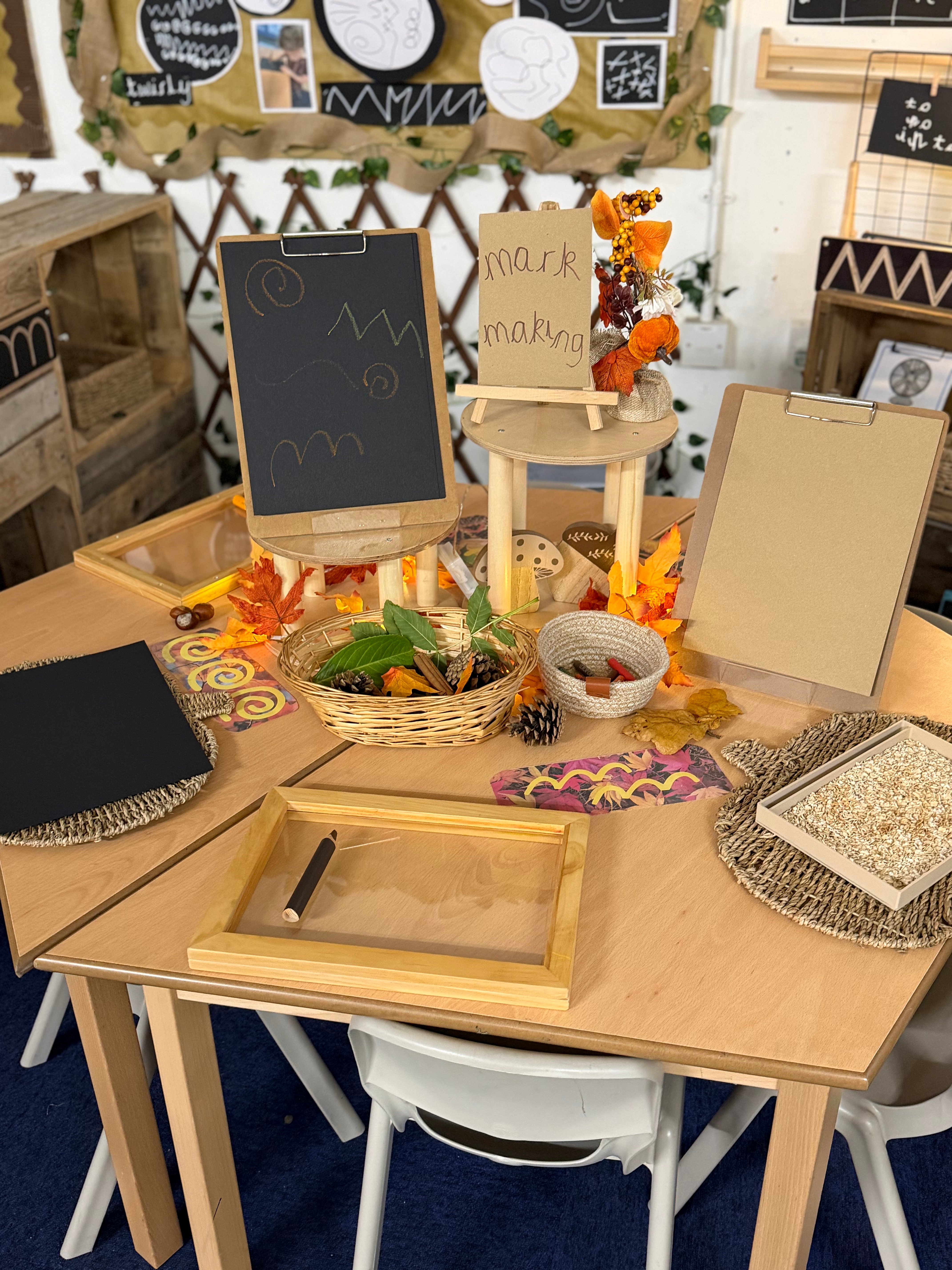
I also love how primary classrooms can respond to the rhythm of the year. The abundance and colours of autumn can gradually move into the warmth, cosiness and belonging of winter, then the new beginnings of spring arrive before the excitement and hope of summer.
So I think the key question is: ‘Is this still useful and meaningful for the children?’
Q: What are some ways to make displays accessible for all learners?
A: My understanding of accessibility has definitely developed as I’ve become more aware and attuned to the needs of all learners.
I would really encourage practitioners to use tools such as the CIRCLE Framework to analyse their own learning environment. Going through different aspects of your physical and sensory environment can be eye-opening. You might discover areas where your classroom is very accessible and others that you simply hadn’t considered before.
One major change for me has been almost completely moving away from laminating display materials unless there is a practical reason for doing so. Under the type of lighting we often have in schools, laminated resources can create a really striking glare and become much harder for some children to read.
I also think carefully about accessible fonts, font size, colour contrast, backgrounds and avoiding unnecessary visual overstimulation. Height matters too. If something is intended to be used by children, whether simply as a visual reference or something they physically interact with, then it needs to be positioned with them in mind.
Q: Can you share an example of a display you’ve created that worked particularly well?
A: One that has worked particularly well has been the way I’ve adapted my writing walls.
Earlier in my career, I had the classic Star Writer approach: photocopy three complete pieces of writing, put them onto a lovely golden or starry frame and display them. The problem was that nobody could really read them from where they were sitting and I’d eventually find myself thinking, ‘Which child haven’t I put up yet?’
In recent years, I’ve moved towards displaying the process rather than simply celebrating a finished product.
I might zoom into one sentence or paragraph from a child’s writing and highlight something particularly effective, like fantastic alliteration, a brilliant piece of punctuation, an effective sentence opener or something that links to our current learning.
Over a term, the wall gradually becomes a collage of examples from lots of different children. It still has flair and style and is eye-catching, but importantly, it is clear, bold and accessible. It becomes something that is referred to, used and hopefully inspires and encourages the children in their own writing.
Q: How do you avoid displays becoming just background decoration?
A: I think it’s okay for some things to become background decoration for a while!
I think about the beautiful Kandinsky-inspired hearts my class created around Valentine’s Day. Initially, they represented the artistic techniques we had explored, particularly watercolour blending, but afterwards they simply brought beautiful colour into the classroom. In this way, there is definitely value in having things around us that we enjoy looking at.
The important thing is balancing those moments with working walls and educational displays.
I think displays become meaningless when we start putting things up for the wrong reasons or simply for the sake of having a display. I’ve been fortunate that I haven’t experienced pressure from management to create displays purely for appearances, although I know from friends and colleagues that this can happen.
We put a great deal of thought into planning learning around principles such as personalisation, choice, challenge and progression. I think we can expect the same for our walls. Are they providing a challenge? Are they demonstrating progression? Do they reflect the learners themselves?
When we think about displays in that way, they’re much less likely to disappear into the background.
Q: What advice would you give to a new teacher who isn’t sure where to start with displays?
A: First of all, take your time. There is absolutely no pressure to fill every wall as quickly as possible.
You might hear the wall stapler in the classroom next door firing away while your boards are still completely empty and that’s okay! Give the children time to produce quality work that actually means something to them when it goes up.
I’d start with something personal during those first days of getting to know your class. It might be ‘How do you want your classroom to make you feel?’, exercises around self-portraits and emotions or something else that showcases who those children are as people. From that first display, you begin to see how involving the children and allowing them to see themselves in the room can grow into everything else.
For curricular displays, look around your school. Ask other teachers if you can see their classrooms and ask them what works for them. Look for inspiration online too, but then speak to the most important people, the children. Ask them what they find useful, what they enjoy seeing and which displays they remember and why.
There are practical tricks you’ll develop too. Teach children how to help put things up. If you use Blu Tack, model how much you need and where it should go. If someone is helping you mount a large amount of work, make an example first so there is a clear model.
Q: What is your one golden rule for classroom displays?
A: Remember that this is your office! This is the space where you and your children are going to spend the bulk of the year, so make it somewhere that you actually want to be.
Make it feel like the kind of classroom you envisioned when you were training to become a teacher. Just to note, it won’t always feel like that. There will be days when it’s messy, days when you’re frustrated by the state of it and days when everything seems to be in the wrong place.
But ultimately, when you walk into your classroom, you want to feel joy and pride seeing what you and your pupils have created.
So my golden rule would be, make it into a space where you and the children feel happy learning. Enjoy it, have fun with it and remember that it’s ever-changing. If you don’t like something, simply take it down and try again.
Ready to refresh your classroom walls? Explore YPO's range of
Display and Presentation
resources and bring your learning spaces to life.